What a prop firm challenge actually is
If you haven't done one before, here's the short version. A prop firm gives you a simulated trading account, usually somewhere between $10,000 and $200,000, and asks you to hit a profit target, normally around 8-10%, without breaking a set of rules along the way. Break a rule, you're out, and you pay again if you want another shot. Hit the target while staying inside the rules, and they hand you a funded account with real money behind it. You keep most of what you make, usually 70-90% depending on the firm.
Most firms today run either a one-step or a two-step evaluation. One-step is quicker, you clear one phase and you're funded, but the drawdown room is usually tighter since the firm has less to go on. Two-step gives you more breathing room across two phases, but takes longer to get through.
The pass rate is still low across the industry, most reliable estimates land somewhere around 10%. That's not because trading is impossible. It's because a challenge tests something different from normal trading. It's testing whether you can stay disciplined on a countdown, not whether you can find good trades.
Why most people actually fail
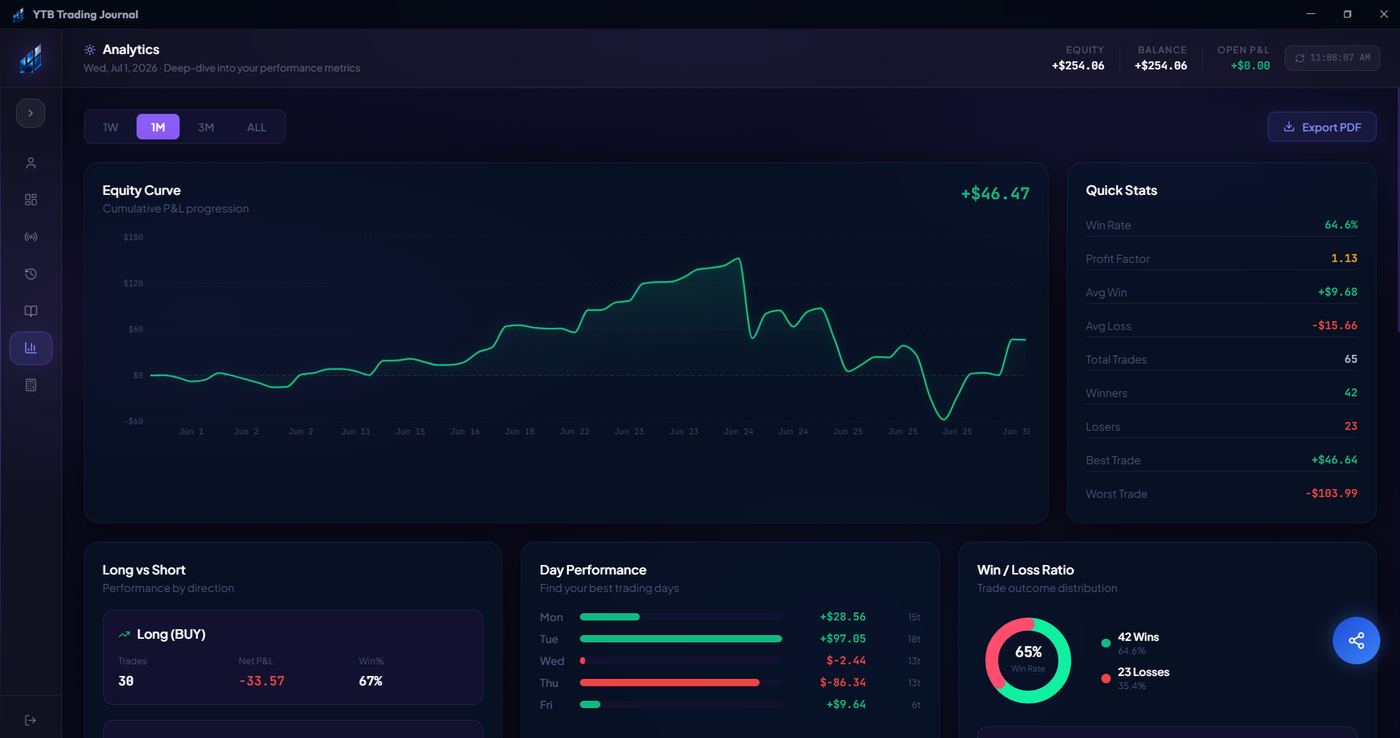
It's rarely a strategy problem. Most traders attempting a challenge already know how to find decent setups. What actually gets people is almost always one of these:
- Rushing the target. There's a limited number of days, so people size up to get there faster. One bad trade at three times your normal size does more damage than five bad trades at normal size.
- The daily loss limit sneaks up. You don't plan to hit it. You take a normal loss, then take a revenge trade to try and make it back the same day, and suddenly you're one bad candle away from being done for the day, or done completely.
- Overtrading out of anxiety. Watching the days-remaining counter makes people take setups they'd normally skip. More trades, lower quality, more chances to break a rule.
- Not knowing the rules properly. A lot of people read the rules once at signup and then just start trading. They find out the exact drawdown calculation or the consistency rule the hard way, usually after it's already cost them the account.
- Treating it like a demo, because technically it is one. The money isn't real yet, so it doesn't feel real either, until a rule violation makes it very real, very fast.
The rules that actually break accounts
The exact numbers differ from firm to firm, but these are the categories that catch almost everyone at some point:
-
1Daily loss limit Usually calculated from your starting balance for that day, not your account's high point. People mix this up constantly and get caught out.
-
2Maximum drawdown The total your account can drop from its peak before you're out. This is based on your highest point, not your starting balance, so a strong run followed by a rough patch can close the gap fast.
-
3Minimum trading days Some firms want you trading across a set number of separate days, so you can't just hit the target in one lucky session and call it done.
-
4Consistency rule Your best single day can't make up too much of your total profit. Topstep, for example, caps your best day at 50% of the profit target. The5ers only counts a day as profitable once it closes at 0.5% or more. This quietly punishes traders who get lucky once and then coast.
What's actually changed in prop firms for 2026
A few things worth knowing before you pay for an attempt this year:
- Regulation is starting to show up. Bodies like the FCA in the UK and Consob in Italy are paying closer attention to firms operating in their regions. It's not everywhere yet, but that's the direction things are heading.
- Automated breach detection is more common. More firms now use systems that flag suspicious patterns, not just outright rule breaks, but behaviour that looks like someone is gaming the evaluation. This makes knowing your exact numbers more important than ever. A rough mental estimate isn't good enough anymore.
- News-trading restrictions are getting tighter. Some firms now block you from opening or closing trades within two to five minutes of high-impact news, and this applies during the funded stage too, not just the challenge.
- A few firms have burned traders by changing rules after the fact. One well-known case in the last year involved a firm changing its scalping and profit-split rules retroactively, cancelling evaluation stages people had already completed. The firm shut down not long after. The lesson here is simple: check that a firm's rules are published, dated, and haven't shifted under people mid-challenge before you pay.
None of this changes the basics of passing a challenge. It just raises the cost of not knowing your numbers exactly.
One-step vs two-step: which one to pick
| One-Step | Two-Step | |
|---|---|---|
| Speed to funding | Faster | Slower |
| Drawdown room | Usually tighter | Usually more forgiving |
| Best for | Traders who already know their exact stats | Traders who want room to adjust mid-evaluation |
If you don't already know your win rate, your average risk per trade, and your worst drawdown across 100+ trades, a two-step gives you a bit more room to correct course. If you already know those numbers cold, one-step gets you funded quicker without much extra risk.
A more realistic way to approach it
None of this is secret advice. It's mostly just doing the boring thing that people skip because it feels slower:
- Trade smaller than you think you need to. If your normal risk is 1% per trade, drop it to 0.5% for the challenge. It'll take longer to hit the target, but a lot longer to hit the drawdown limit too, and that's the actual thing you need to survive.
- Know your exact numbers before you place a single trade. Your daily loss number, your max drawdown number, your consistency threshold. Memorised, not estimated. Don't rely on remembering it once you're a few days in and things get stressful.
- Ignore the days remaining. Firms usually give you more time than you actually need if you're not rushing. The countdown is what causes the sizing-up mistake in the first place.
- Treat every trade like it's already funded. The accounts that pass tend to belong to people who trade the challenge exactly like they'd trade real money, not like a free lottery ticket.
- Set a hard stop for the day, and actually respect it. Decide before the session starts: if I hit this loss, I'm done for today, no matter what. Write it down somewhere you'll actually see it again.
Why journaling is your real edge in a challenge
Here's the part most people don't think about until it's too late: a prop firm challenge is basically a rules test wearing a trading costume. You can have a genuinely good win rate and still fail, simply because you weren't tracking how close you were to a limit.
This is exactly where a journal earns its keep, and not for the usual "review your trades later" reason. If every trade gets logged the moment it closes, you always know your real-time distance from the daily loss limit and the max drawdown, instead of guessing or doing mental math mid-session when you're already stressed.
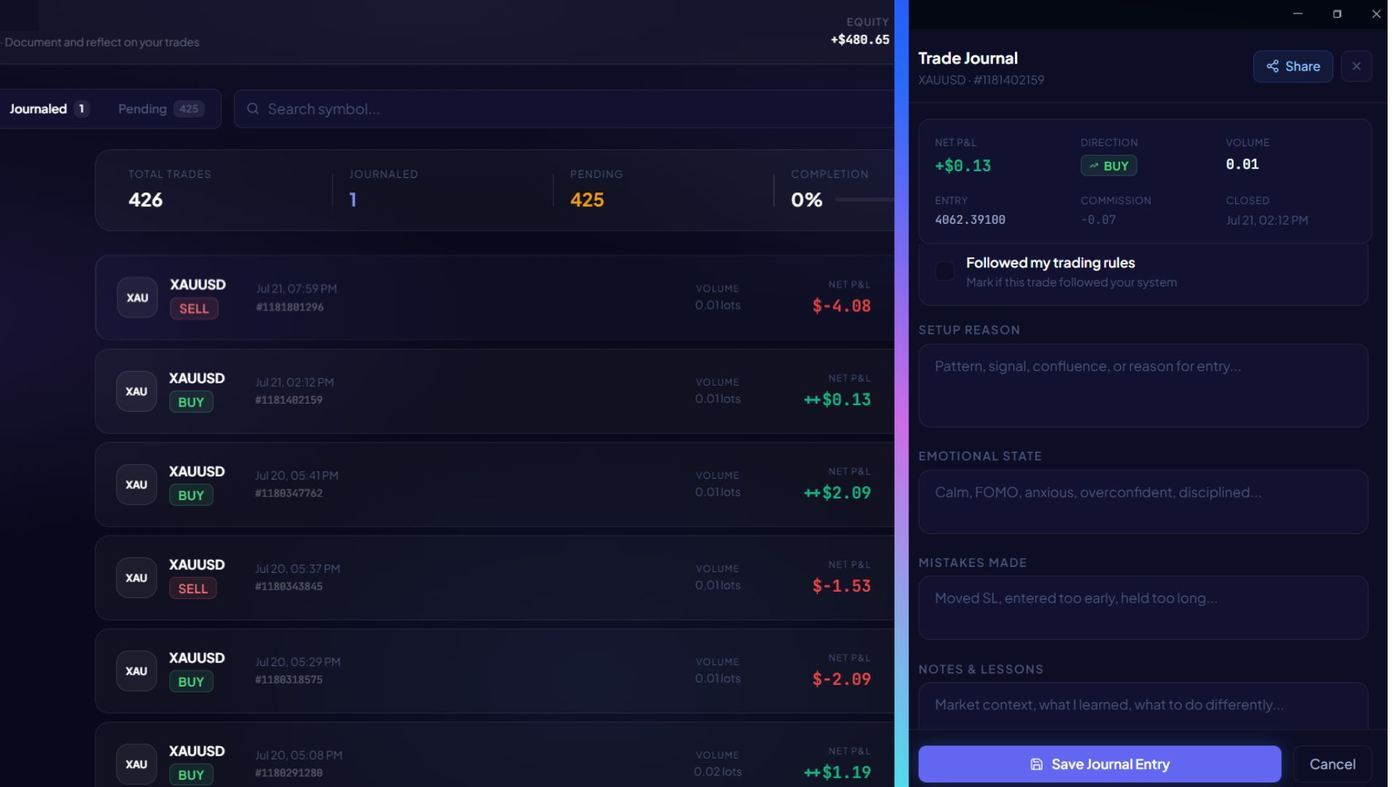
This is actually one of the simplest, most underrated features in YourTradeBook. Every trade has a single checkbox: Followed my trading rules. During a normal week that's a nice-to-have. During a challenge, it's the difference between catching yourself early and finding out the hard way once the account's already gone. Pair that with the built-in risk calculator, so you're sizing every trade correctly before you enter, not estimating in your head, and you've got a real-time compliance check running quietly behind every trade, not just a record you look back on after the damage is done.
It's not flashy. It's just the boring, practical thing that happens to matter enormously the one time the rules actually have teeth.
How YourTradeBook helps you pass
A lot of this guide comes down to one thing: knowing exactly where you stand, at all times, without guessing. That's really all YourTradeBook is built to do.
- Your equity, tracked automatically. Every trade syncs straight from MT5, so your real-time equity and open P&L are always accurate, no manual updating, no spreadsheet drift.
- Your mistakes, caught early. The "Followed my trading rules" checkbox on every trade means you notice you're drifting off-plan on day 3, not day 9, when the account's already gone.
- Your emotions, on record. Logging how you felt going into a trade, calm, FOMO, anxious, overconfident, turns vague gut feelings into a pattern you can actually see and fix.
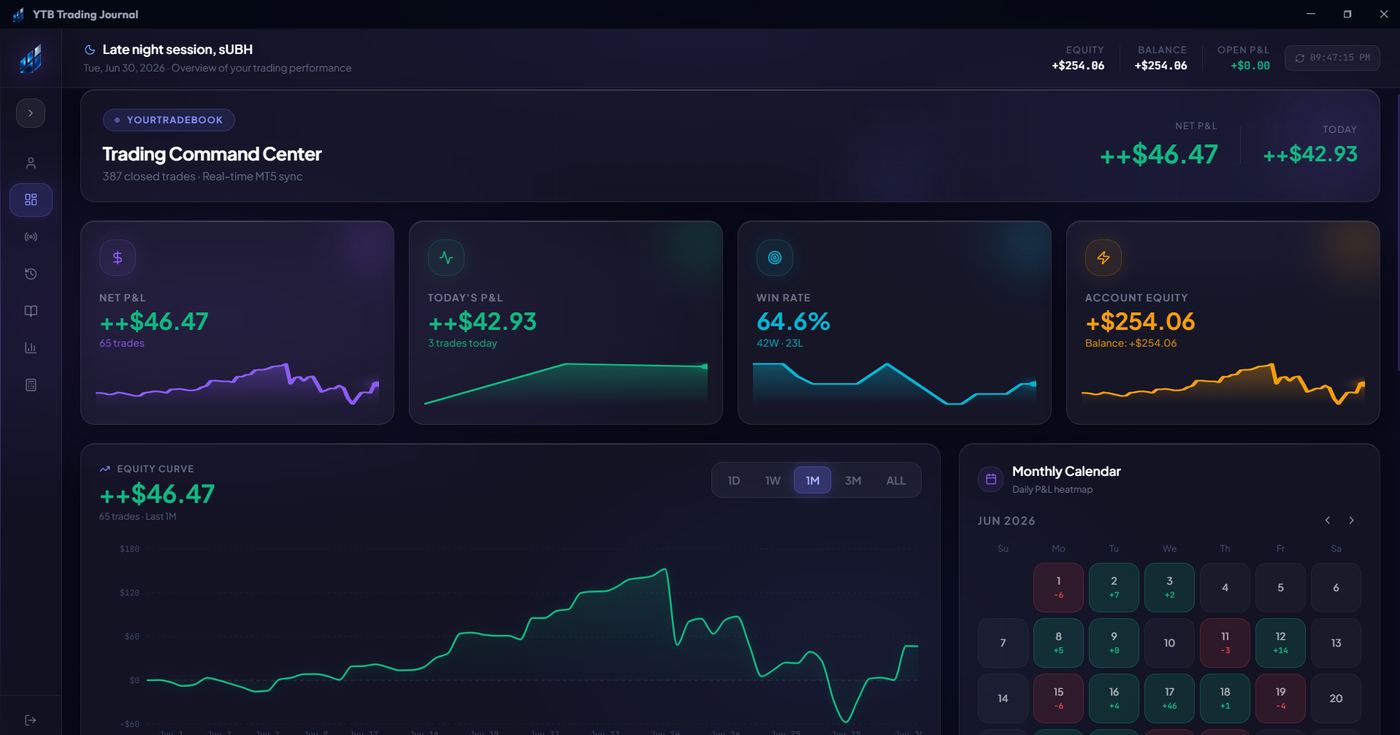
- Your profit and loss, laid out clearly. The equity curve and monthly calendar heatmap make it easy to self-check the consistency rule and spot whether one lucky day is quietly carrying your whole month.
- Your data, completely private. YourTradeBook runs fully offline, no cloud, no server storing your trades or your account details. Nothing about your equity, your mistakes, or your name ever leaves your own machine, and there's more to it than just that on our website.
Put together, that's a live compliance check running in the background of every single trade, not just a record you look at after the damage is already done. And since it's fully offline, it's not something every other journal in the trading space can say, that's what makes YourTradeBook genuinely different.
Frequently asked questions
Is it worth doing a prop firm challenge if I'm still learning?
Probably not yet. Challenges reward traders who already have a consistent process and just need capital. If you're still figuring out your strategy, the pressure and cost of repeated attempts usually isn't worth it until your process is solid on a personal account first.
What's the single biggest mistake to avoid?
Sizing up to chase the profit target faster. It's the one mistake that shows up in almost every failed challenge story, regardless of the firm or the specific rules.
What exactly is the consistency rule?
It limits how much of your total profit can come from one single day, for example Topstep caps your best day at 50% of the profit target. It exists to filter out one lucky trade from a genuine, repeatable edge.
Do funded accounts have the same rules as the challenge?
Usually yes, often with a similar or sometimes stricter drawdown rule, so the habits you build during the challenge aren't just for passing, they're the habits you'll need to keep the account afterward too.
Should I use the same risk per trade in the challenge as I do normally?
Generally, size down. The math of a hard drawdown limit is unforgiving in a way normal trading isn't. A string of losses that would just be a rough week on a personal account can end a challenge outright.
Final thoughts
Passing a prop firm challenge really isn't mostly about finding better setups. It's about respecting a set of rules closely enough, for long enough, that a string of normal, ordinary trading days doesn't accidentally turn into a rule violation. Slow down, size down, know your numbers cold, and track every trade against the actual limits, not just your P&L. That's most of the battle.
You can make passing a challenge a lot easier by using YourTradeBook alongside it, simply because you understand your account better: your emotions, your journal, your wins and losses, all in one place, updated the moment a trade closes.
For more info, check yourtradebook.com.
https://yourtradebook.com/blog/best-offline-trading-journal-2026